
Secure Network Activity Register – 5709082790, 5712268380, 5713708690, 5716216254, 5732452104, 5732458374, 5733315217, 5735253056, 5742595888, 5804173664

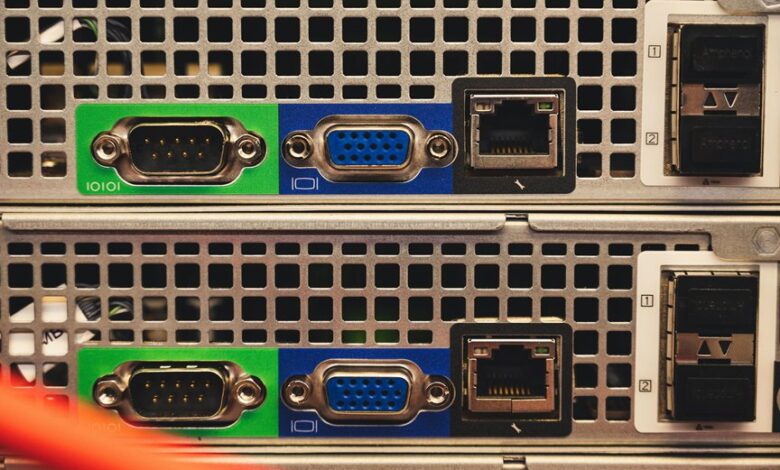
The Secure Network Activity Register (SNAR) entries listed illustrate a structured telemetry model for observed network events. Each ID corresponds to a discrete datapoint mapped to standardized identifiers, enabling real-time tagging, cross-source correlation, and governance-compliant analysis. The approach supports prioritized containment and scalable incident response while preserving privacy. Yet, practical deployment raises questions about data sources, lineage, and actionability that warrant careful examination before broader adoption.
How the Secure Network Activity Register Works in Practice
The Secure Network Activity Register (SNAR) captures and organizes observed network events into a structured ledger, enabling systematic analysis of traffic patterns and potential anomalies.
In practice, SNAR correlates logs, timestamps, and metadata to reveal asymmetries, trends, and deviations.
Data privacy is preserved through controlled access, while incident response workflows leverage findings to prioritize containment, investigation, and remediation decisions.
Why S-NAR Tags 10 Critical Identifiers Matter for Security Visibility
Why S-NAR tags the ten critical identifiers matter for security visibility lies in their collective capacity to standardize and elevate interpretability across diverse network events. This standardization enables clearer data governance practices and consistent anomaly detection signals, reducing ambiguity. The identifiers provide structured context, improving correlation across sources, accelerating analysis, and supporting proactive risk management without constraining investigative freedom.
Implementing S-NAR: From Data Sources to Real-time Anomaly Detection
Implementing S-NAR starts by mapping data sources to the standardized identifiers established earlier, aligning telemetry from network devices, endpoints, and security tools with the ten critical tags. The process emphasizes data mapping rigor, normalized streams, and signal integrity.
Anomaly tagging is applied to real-time streams, enabling rapid correlation, thresholding, and continuous validation of baselines without introducing extraneous complexity.
Designing Your S-NAR Rollout: Metrics, Governance, and Next Best Actions
Could a structured rollout framework—anchored by metrics, governance, and actionable next steps—optimize S-NAR deployment outcomes?
The analysis outlines a design governance approach that aligns stakeholders and controls scope, while metric alignment tracks performance, risk, and detection latency.
Roadmaps define milestones, accountability, and feedback loops, enabling disciplined iteration, transparent decision-making, and scalable, freedom-respecting deployment across evolving network environments.
Frequently Asked Questions
What Is the Purpose of Secure Network Activity Register (S-Nar)?
The Secure Network Activity Register (SNAR) gathers telemetry to illuminate insight gaps and inform risk mitigation. It systematically analyzes traffic patterns, highlighting anomalies, documenting exposure, and guiding proactive controls while supporting an audience that values freedom and accountability.
How Is Data Retention Managed Within S-Nar?
Data retention within s-nar is governed by policy-defined retention windows, automated archival processes, and secure deletion. Data legacy logging is preserved briefly for integrity checks, while older records transition to long-term storage or are purged per compliance.
Can S-Nar Integrate With Legacy Logging Systems?
Yes, s-nar supports integration with legacy logging systems, though integration challenges arise. The system emphasizes legacy compatibility through adapters and standardized interfaces, enabling phased migration while preserving data integrity, audit trails, and interoperability across heterogeneous logging environments.
What Privacy Considerations Apply to S-Nar Data?
Privacy considerations require transparency and consent, with data minimization guiding collection, retention, and access. Although operational needs exist, the system should minimize personal data, enforce access controls, and document processing to preserve user autonomy and trust.
How Is S-Nar Pricing Modeled and Billed?
S-NAR pricing is modeled using usage-based and tiered schemes, balancing data volume and feature access. Billing cadence incorporates periodic invoices with clear milestones; correlations among activity, retention, and service level obligations are meticulously tracked for transparency.
Conclusion
In this ledger of digital weather, SNAR entries function like calibrated barometers, translating hidden tremors into measurable signals. Each telemetry instance acts as a weather vane, aligning with standardized identifiers to reveal patterns across disparate sources. The architecture, governed and scalable, filters noise to expose actionable anomalies. As data flows through well-defined sources and real-time detectors, the system transforms scattered observations into a coherent forecast for containment, governance, and decisive, future-ready responses.